The Agrarian Economic Struggle in India
The Agrarian Economic Struggle in India
Abstract
A comprehensive study of the agricultural sector as an important part of
the economy is done by observing the various problems those employed in it
undergo, highlighting its strange yet unique position in the Indian context. We
look into a few measures undertaken by the government to remedy these obstacles
to the agricultural sector and analyse it with reference to the IS-LM model.
Introduction
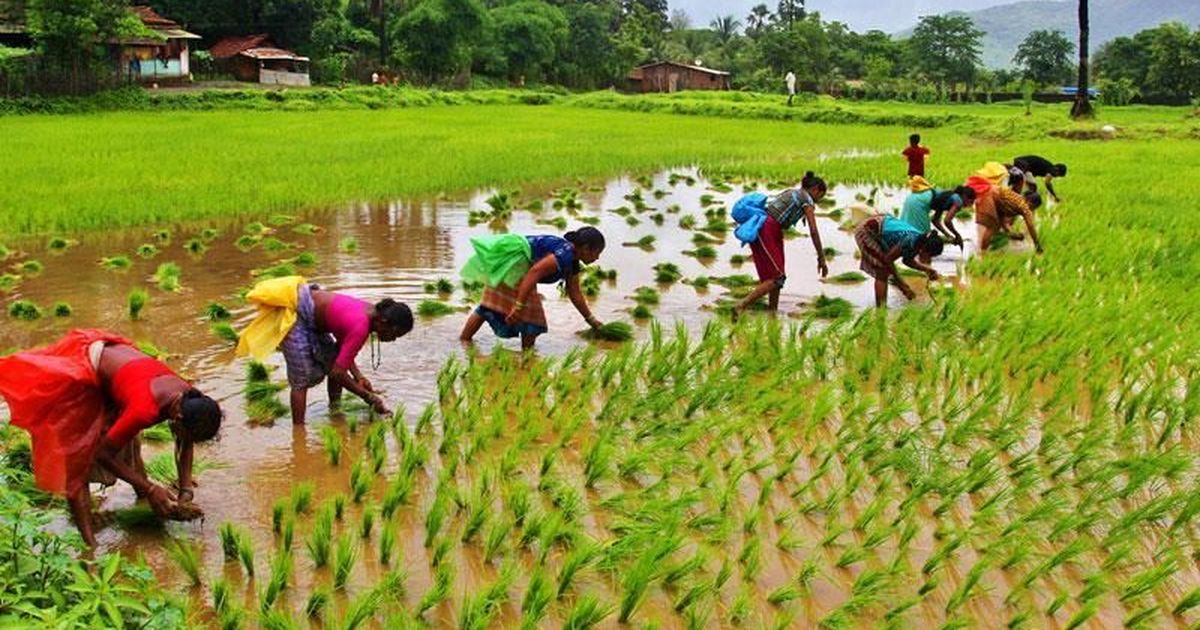
India’s economic problems with regards to agriculture are not an issue
just in the contemporary timeline, but throughout its history. Although it
comprises less than a measly 20% of our economy, more than half of the
population is employed in it and are dependent on it for their livelihoods. Farming,
animal husbandry, fisheries etc are some of the commonly practiced activities
coming under this umbrella. Due to a large number of people being employed in
agriculture, India is the largest producer of many fruits and vegetables, milk,
spices etc.
Before independence, most of the agricultural produce was only of direct
benefit to the British who exploited India as a mere producer of its exports.
Farmers earned very less income to fend for themselves and their families
during the colonial period, where they became prey to heavy taxes and the
zamindari system. Farmers who owned plots of land managed to somehow maintain
their livelihoods. Landless labourers were uncertain of employment. Agriculture
was also affected due to natural disasters like droughts and famines. The Bengal
Famine of 1943 was responsible for 3 million deaths alone. All this contributed
to the reduction of the economic feasibility of agriculture.
After independence was achieved in 1947, certain measures were
undertaken by the Government of India to improve the agricultural scenario in
the country. They felt that the country had to be self-sufficient and sought
technological methods over traditional practices. This paved the way for the
Green Revolution in the 1960s incorporated the use of high yield variety (HYI)
seeds, which greatly increased the production of agricultural, marginally and
totally. The White Revolution was
undertaken to similarly increase milk production in India. The food security of
the country has substantially risen. Reduced share of agriculture in the GDP is
primarily due to rapid growth in services, industry and other sectors after the
turn of the millennium.
However, slow growth in agriculture, accompanied with a large population
dependent on it for employment has only created more and more problems for the
country. The government has taken some policy measures to tackle these problems
so as to ensure the needs of the people and the sustenance of the agriculture
sector.
Agricultural Problems
"With a population of just over 1.3 billion,
India is the world's largest democracy. In the past decade, the country has
witnessed accelerated economic growth, emerged as a global player with the
world's fourth largest economy in purchasing power parity terms, and made
progress towards achieving most of the Millennium Development Goals. India's
integration into the global economy has been accompanied by impressive economic
growth that has brought significant economic and social benefits to the
country. Nevertheless, disparities in income and human development are on the
rise. Preliminary estimates suggest that in 2009–10 the combined all India
poverty rate was 32 % compared to 37 % in 2004–05. Going forward, it will be
essential for India to build a productive, competitive, and diversified agricultural
sector and facilitate rural, non-farm entrepreneurship and employment.
Encouraging policies that promote competition in agricultural marketing will
ensure that farmers receive better prices." — World Bank: "India
Country Overview 2011"
The rise in prices
of goods (inflation) has been the main problem which greatly impacts those
employed in agricultural practices. The income generated isn’t feasible as many
producers do not get worthy return of investment. This issue supersedes many
other problems.
Though the country has achieved self-sufficiency, the
productivity still lags behind many other countries. The yield per area rate is
very low in comparison to countries like Brazil, United States etc. The total
factor productivity growth remains less too. Eradication of hunger and
malnutrition is essential to achieve greater production comparable with other
world nations.
Another problem is the lack of infrastructural development.
India has very poor rural roads affecting timely physical distribution of both
inputs and outputs. Irrigation systems are inadequate, sometimes leading to
crop failure due to lack of water. The lack of storage facilities and the lack
of an integrated market structure which promotes competition lead to wastage of
agricultural produce.
The effects of climate
change and the ill-impact of greenhouse gases are also said to be responsible
for agricultural crisis.
Implemented
Policy Measures
Though
economic growth has increased greatly in India, the growth in agriculture has
been sluggish. As a result, the increase in per capita income has increased the
demand by so much that the supply of agricultural produce isn’t adequate. This
has seen as the factor responsible for the rise in prices. There is no long run
relationship between money supply and agricultural price. Increasing public
expenditure and unfavourable foreign exchange rate have some effects on price
although the results are not robust.
Recently implemented policy measures by the government to ease the agricultural
labour of their tensions include:
1.) In 2018, under the
PM-KISAN scheme, the government announced that every farmer will be paid an
annual income of a minimum of 6000 Rupees.
2.) Start-ups with upgraded technology and new business
models with government backing are working to solve problems in Indian
agriculture and its marketing. An example is Kandawale, an e-commerce
website which sells Indian red onions to bulk users direct from farmers,
reducing unnecessary cost escalations.
3.) In
2016, National Agriculture Market (e-NAM) was
launched. It promotes an e-marketing platform at the national level and
supports the creation of infrastructure to enable the revolutionizing of agriculture
markets by guaranteeing better price discovery. It also brings in transparency
& competition to enable producers to get improved remuneration for their
produce.

IS-LM Linking to the Policies
1.) When the government announced that every farmer would be paid a
minimum annual income of 6000 Rupees, it meant that the government vowed to
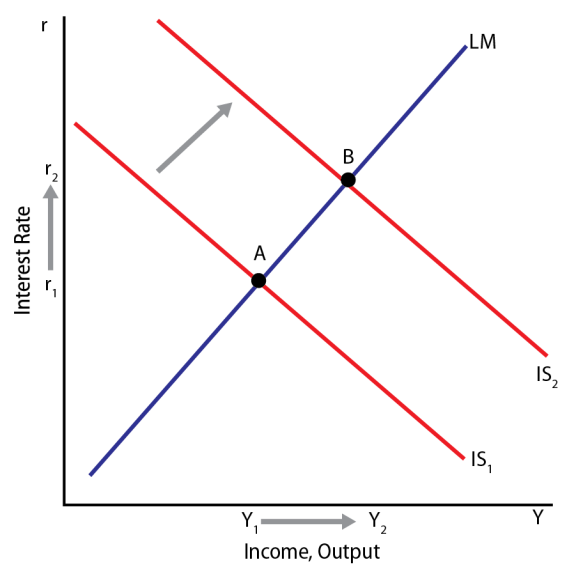
generate enough money to pay all of these farmers. This was an expansionary
monetary policy which meant that there would be an increase in the supply of
money. This implies a rightward shift in the LM curve. When farmers receive
this income, they are able to produce more output and this would naturally
cause a rise in prices of agricultural commodities. When there is a change in
price, aggregate demand moves along the curve.
The initiative was criticized by many owing to the fact that it wasn’t
only specified for the lower income group of farmers, but to farmers of all
income groups. Some felt that the minimum income wasn’t sufficient enough to
meet the farmers’ needs.
2.) Upgrading of technology and marketing will help develop the
agricultural sector in the country. This means that there is an expansionary
fiscal policy in play as the government expenditure increases so as to bring in
new technological methods. This implies a rightward shift in the IS curve. As
more output is produced at lower costs of both production and physical
distribution, the same price is maintained. Due to change in output, there will
be a rightward shift in aggregate demand.
Technological changes help the agricultural sector in better promotion
of its produces and greatly reduce the costs for them too.
3.) E-marketing helps in making the agricultural produce available to
consumers on a larger scale. As this is another technological change, it is an
expansionary fiscal policy which is involved due to increased government
spending to facilitate this. This again implies a rightward shift in the IS
curve. As there is a change in output, there will be a rightward shift in
aggregate demand. Due to increased transparency and competitiveness, the
producer is able to discover the same price or a price similar to it.
E-marketing is a brilliant technological change which will greatly
benefit the agricultural sector as it enables a sense of competition and more
transparency among producers. Costs are lower and they are motivated to grow
their best produce to get the best price in the market amidst heavy
competition.
Conclusion
The agricultural sector being the largest employer, even after rapid
globalisation and liberalisation of the Indian economy bears a testament to the
fact that India is incomplete without its agriculture. Albeit its contribution
to the GDP is measly, a large number of people depend on it. These people face
many obstacles in an eclectic range of forms while managing to maintain their
livelihoods. In order to ensure their growth and development along with the
country’s growth and development, the Government of India has taken various
measures in the form of fiscal and monetary policy measures. These may have
eventually had a direct or adverse impact on the agricultural sector, but they
are taken with the interest of the sustenance of the agro-based sector. The
IS-LM model effectively helps us analyse these measures to observe what has
happened due to the measures undertaken and detect whether it has had a
positive or negative outcome. With subtle and effective policy measures, the
agricultural sector of India can hope to grow as a more important contributor
to not just the employment side of the economy, but the economy as a whole.
References
“India
Country Overview 2011”. World Bank 2011. https://web.archive.org/web/20110522115104/http://www.worldbank.org.in/WBSITE/EXTERNAL/COUNTRIES/SOUTHASIAEXT/INDIAEXTN/0,,contentMDK:20195738~menuPK:295591~pagePK:141137~piPK:141127~theSitePK:295584,00.html

Great research and explanation!
ReplyDeleteVery interesting and informative read!
ReplyDeleteA good read! very informative, especially the IS-LM linking which I was not aware of earlier.
ReplyDeleteVery well written!! Good job bro
ReplyDeleteGood effort! Really enjoyed reading the blog. You have made me proud.
ReplyDeleteWell written! Good job
ReplyDeleteVery well researched and articulated. Good job!
ReplyDeleteGreat job bro, a really insightful analysis on the IS-LM framework!
ReplyDeleteVery informative and well articulated.
ReplyDeleteChoice of the topic is brilliant. Very well explained and nicely presented.
ReplyDeleteWell articulated! Keep it up!!
ReplyDeleteWell explained!
ReplyDeleteVery well written
ReplyDeleteA very nice analysis Joel! Informative
ReplyDeletePrecise and engaging. Keep it up!
ReplyDeleteWell written and explained
ReplyDeleteWell drafted! Good work!
ReplyDeleteVery informative. Good job!
ReplyDeleteExcellent read! Well written.
ReplyDeleteInsightful. Well-written and presented.
ReplyDeleteWell researched and well written 👏👏
ReplyDeleteamazing work ��
ReplyDeleteVery informative and well presented!
ReplyDelete